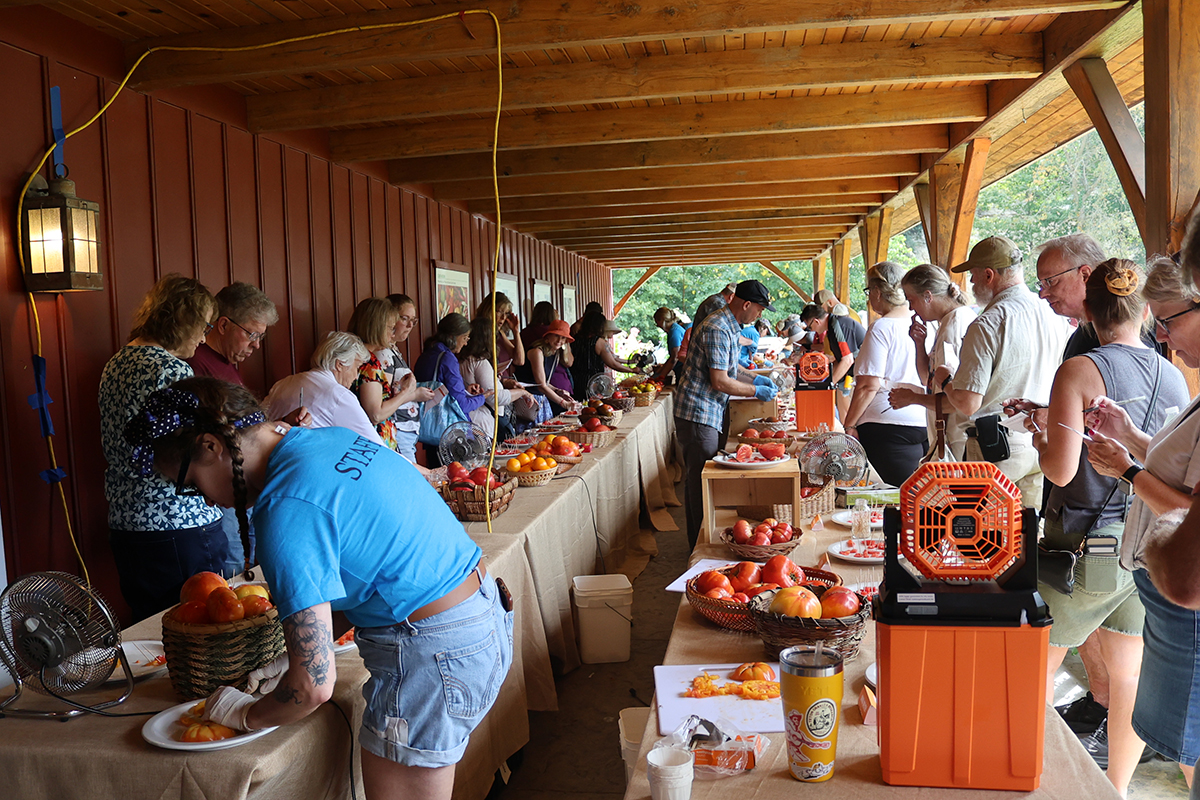
Visit Us
Heritage Farm in Decorah, Iowa is the headquarters of Seed Savers Exchange.
Heritage Farm in Decorah, Iowa is the headquarters of Seed Savers Exchange.
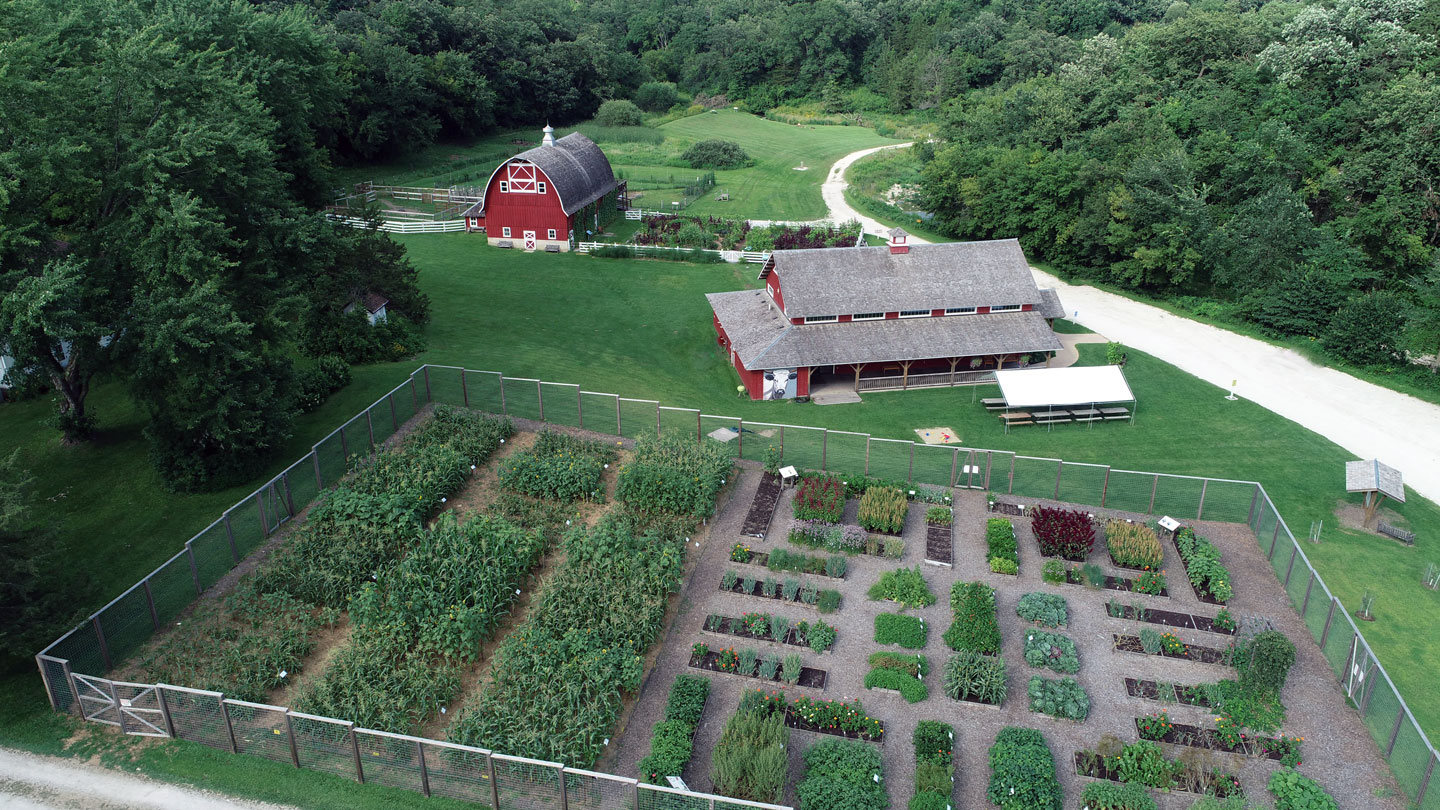
When you visit Heritage Farm, you’ll find our Lillian Goldman Visitors Center and gift and garden store, miles of hiking trails, display gardens, and our Historic and Goldman orchards. It’s also where we host events and house our seed collection. Our entire team (including our preservation and education staff, donor and member services, the garden crew, and the order fulfillment team) is based here, too.
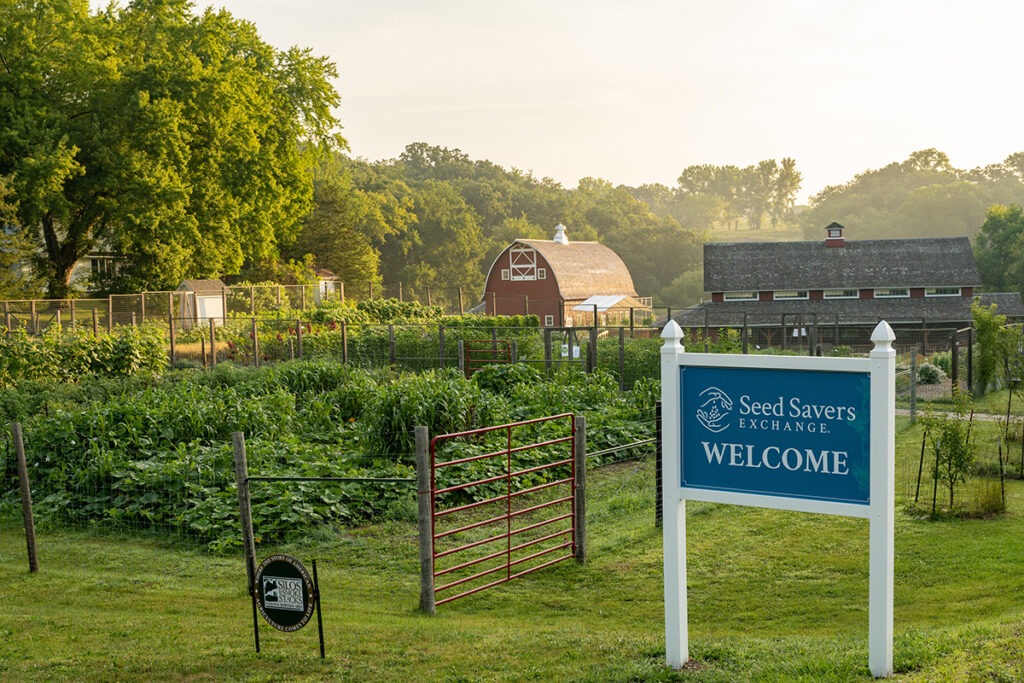
We’re located in the northeast corner of Iowa, just outside the city of Decorah (population: 8,000). Our 890-acre farm boasts rolling hills, stoney bluffs, and beautiful rivers and streams as well as multiple gardens where we grow nearly 1,000 varieties of seed each year.
Address: 3074 North Winn Rd, Decorah, IA 52101
Phone: (563) 382-6104
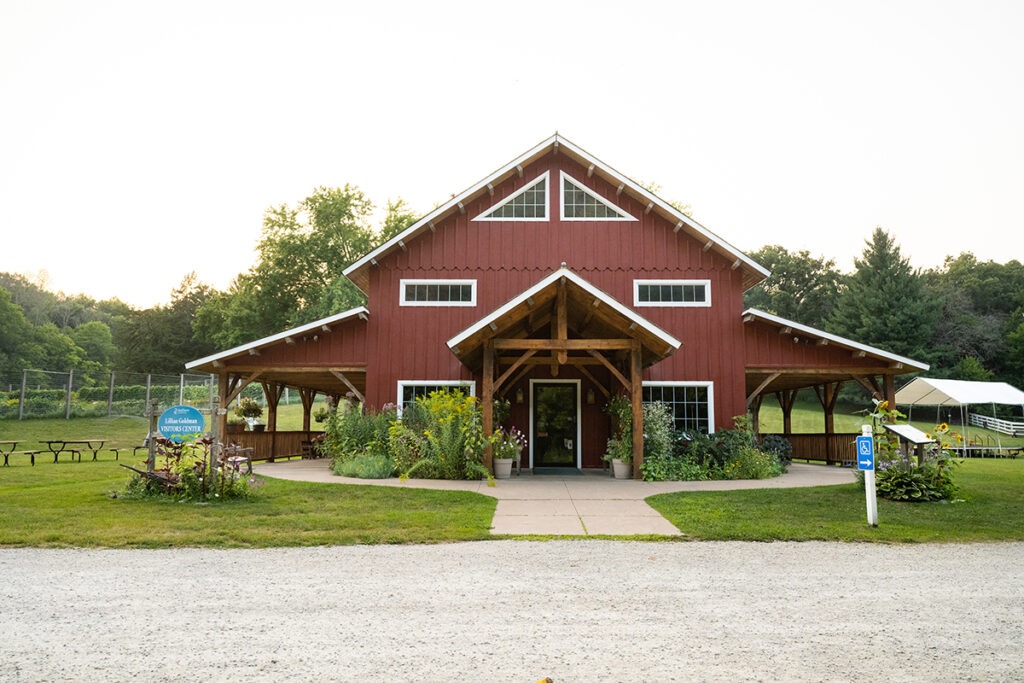
The best place to start any visit to Heritage Farm is at the Lillian Goldman Visitors Center. We’ll give you an introduction to the history of Seed Savers Exchange and Heritage Farm and serve as your home base as you explore our display gardens and trails.
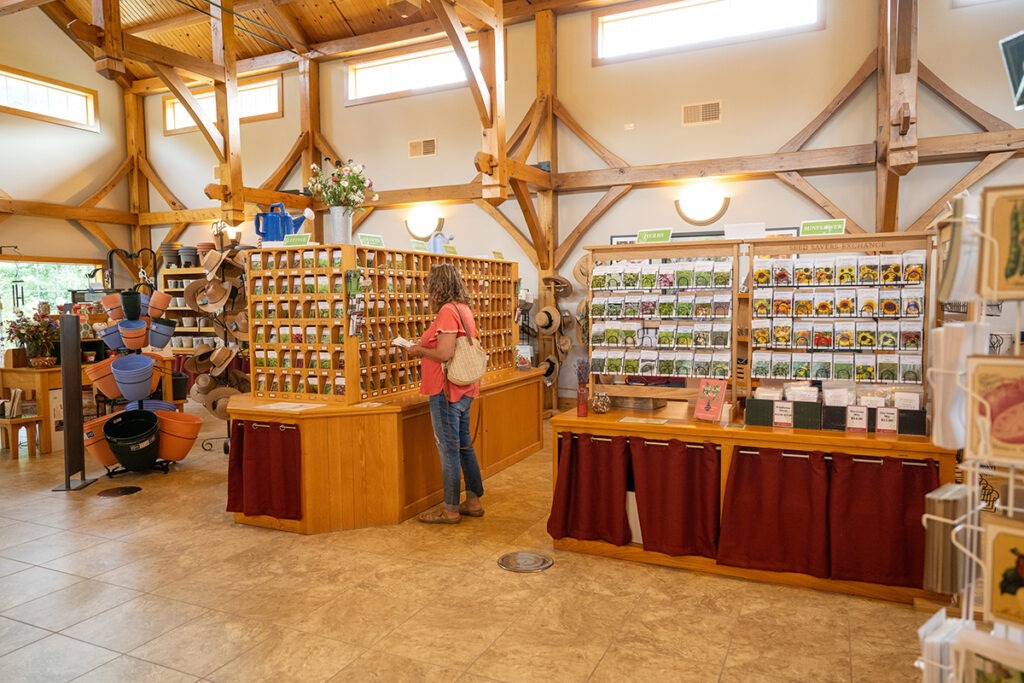
Shop seeds, garden gear and tools, food, and garden-themed gifts, local art, books, and more.
The Lillian Goldman Visitors Center at Heritage Farm is now open for the 2026 season!
The Lillian Goldman Visitors Center is open from March through October, seven days a week, 10:00 am–5:00 pm, CT. The LGVC is closed on Easter Sunday, Memorial Day, Juneteenth, July 4, and Labor Day. Heritage Farm’s trails, gardens, and trout streams are open to the public, sunrise to sunset year-round.
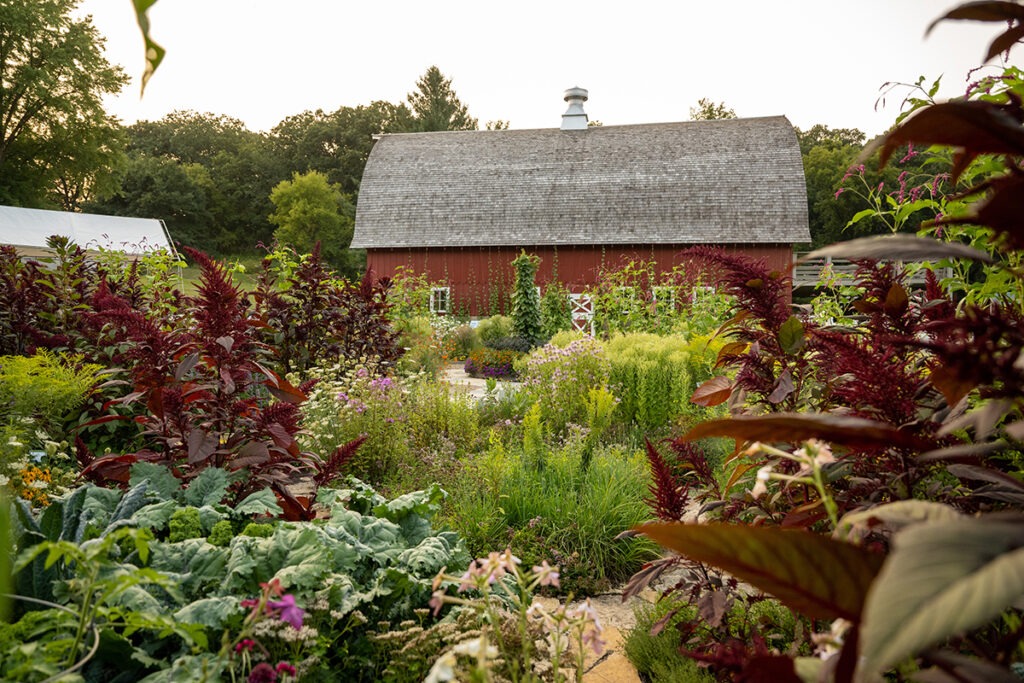
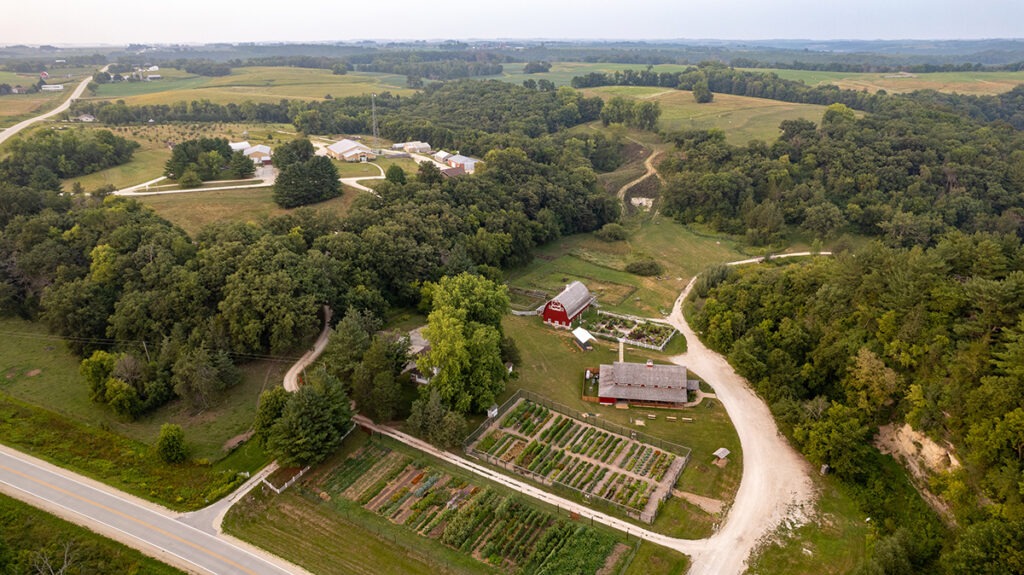
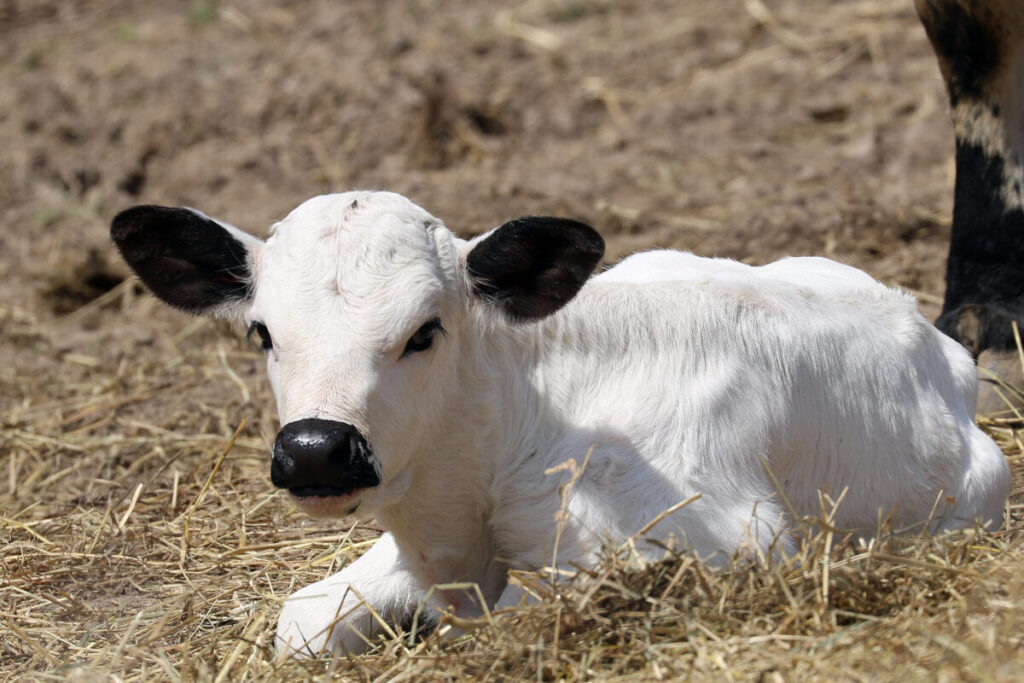
When you visit Heritage Farm, make sure to experience:
Request a Tour
Guided tours of the lower campus gardens are available May through September, Monday through Friday, for groups of 15 or more people. Cost is $8 per person for a 45-60 minute history of Seed Savers Exchange, garden tour, and Q&A.
$5 per person (recommended for ages 5-12) for a 30-45 minute interactive garden experience.
Guided tours must be scheduled two weeks ahead of time.
2026 Events
Seed Savers Exchange offers a mix of virtual and in-person events throughout the year. Learn from our knowledgeable staff as well as experienced growers and seed savers in our network, and support our nonprofit mission to save America’s heirloom seeds.
Located in the heart of the Driftless region, Decorah and the surrounding area offer plenty of things to do and see. Learn more about other local events, attractions, dining, and overnight accommodations at VisitDecorah.com.